
And What to Do Instead)
By Simone Knego | simoneknego.com
Every year, companies spend billions on team building. Ropes courses. Escape rooms. Catered offsites. And every year, leaders walk back into Monday wondering why nothing actually changed.
Here’s the truth nobody wants to say out loud: most team building doesn’t work. Not because the activities are bad. But because they’re treating the symptom instead of the cause.
The real problem? Teams can’t step up when they don’t feel safe to. And they won’t feel safe until the leader does something first.
So What Does Psychological Safety Actually Mean?
Before we get into the numbers, let’s define it. Because “psychological safety” sounds like corporate jargon, and it’s not.
Psychological safety is just a fancy way of saying people feel safe to speak up. Safe to ask a question without feeling stupid, safe to disagree without getting shut down. Safe to try something new without being afraid of what happens if it doesn’t work.
It’s not about being coddled or never having hard conversations. It’s actually the opposite. Teams with psychological safety have more honest conversations, not fewer. They surface problems faster, they innovate more. They don’t waste energy protecting themselves.
Think about a time you were on a team and had an idea but didn’t say it. Maybe the room didn’t feel safe for it. That’s what’s missing. And when that happens across an entire organization, the cost is enormous. Missed ideas. Slow decisions. People who check out quietly while still showing up.
The Data Tells the Story
Let’s look at what’s actually happening in workplaces right now.
Only 26% of leaders are creating psychologically safe environments for their teams. (McKinsey)
61% of employees say a perceived lack of trust from leadership directly impacts their ability to do their jobs. (PwC, 2024 Trust Survey)
22% of employees have left a company specifically because of trust issues. (PwC, 2024 Trust Survey)
Only 30% of U.S. employees believe their opinions matter at work. (Gallup)
Read that again. Nearly three in four leaders are not creating the conditions their teams need to perform. And yet they’re booking team building retreats and wondering why engagement is still flat.
It’s not just a team problem. It’s a leadership problem. And the good news is, it’s a solvable one.
What’s Actually Trending in Team Building Right Now
Companies are pouring real attention into this. 2026 research from Outback Team Building shows that the top priority is rebuilding genuine collaboration, not just scheduling activities. Leaders want their people to actually connect, not just co-exist in the same Zoom room.
And industry data shows that companies are shifting from frequent one-off events toward fewer, higher-impact experiences. They’re spending more per person and expecting more in return.
That’s progress. But here’s where most organizations still get it wrong: they’re investing in the experience without investing in the environment. And without the right environment, even the best team building moment fades by Wednesday morning.
Why Team Building Fails
Here’s a scenario that might sound familiar.
A leader implements every best practice. Clear KPIs. Regular one-on-ones. Team building retreats. But the team still feels fragmented. Disconnected. Like they’re all rowing in different directions.
Why? Because the leader never once admitted to struggling with anything. The team didn’t trust her because she didn’t seem human.
That’s the real gap. Google’s landmark Project Aristotle study looked at nearly 200 teams over five years and found that the number one factor separating good teams from great ones wasn’t talent, strategy, or structure. It was psychological safety. The ability for team members to take risks, ask questions, admit mistakes, and disagree without fear.
You can’t manufacture that with a trust fall. You build it by showing up differently as a leader.
The Leader Has to Go First
This is what I talk about in my keynote, Teams That Move. Real team performance doesn’t start with a better activity. It starts with a leader who gives their people permission to fully show up.
There’s a leadership shift happening right now that the best organizations are paying attention to. Research published in 2026 puts it this way: the most effective leaders have moved from being the hero to being the guide. They create clarity without claiming certainty. They hold space for hard conversations without rushing to fix everything.
That requires a different kind of confidence. Not the kind that has all the answers. The kind that says, “I don’t know, and that’s okay” without losing credibility. The kind that lets others shine.
When leaders show up that way, teams follow. When they don’t, no amount of ropes courses will close the gap.
What This Looks Like in Practice
So what does it actually mean to lead differently? Here are three shifts that move teams from stuck to stepping up.
1. Drop the Qualifiers
The language you use as a leader shapes the culture around you. When you preface ideas with “this is just a thought” or “I’m probably wrong, but” you signal to your team that uncertainty is something to hide. It isn’t. I call this Drop the Just™. The words we minimize ourselves with teach others to minimize themselves too. Stop doing it. Say what you mean with confidence, even when you’re still figuring it out.
2. Normalize Failure Out Loud
Teams only take risks when they believe it’s safe to fail. And they only believe that when they see the leader fail first, and survive it. Share your own missteps. Talk about what you tried, what didn’t work, and what you learned. Not as a vulnerability performance, but as genuine leadership modeling. The REAL Method™ is built on this principle: Embrace Your Failures. It’s the E in REAL, and it’s the one leaders most consistently skip.
3. Ask, Then Listen
One of the simplest and most underused leadership tools is asking your team what they actually need. Not in a survey that gets filed away. In a real conversation where you take notes and then do something about it. Gallup research consistently shows that teams perform better when people feel involved, connected, and aligned. That doesn’t happen through activities. It happens through genuine dialogue.
The Real Competitive Edge
Here’s what the data makes clear: confidence isn’t soft. It’s operational.
When leaders build cultures where people feel seen, trusted, and empowered to act, the results show up in the numbers. Workplace wellbeing research going into 2026 shows that teams in high-trust environments see compounding benefits over time. Better communication. Softer silos. Stronger collaboration. People who stay.
That’s not a nice-to-have. That’s a retention and performance strategy.
The companies winning right now aren’t the ones with the best team building budget. They’re the ones with leaders who’ve done the inner work to show up with real confidence, and created space for their teams to do the same.
Where to Start
If you’re a leader who wants a team that actually moves, here’s your honest starting point:
• Look at your own language. Are you qualifying, hedging, and minimizing? Drop it.
• Ask yourself what you’re modeling. If your team isn’t taking risks, ask whether they’ve ever seen you take one.
• Stop waiting for the right activity. Start with the right conversation.
Team building isn’t a destination. It’s a daily practice. And it starts with you.
Ready to build a team that steps up?
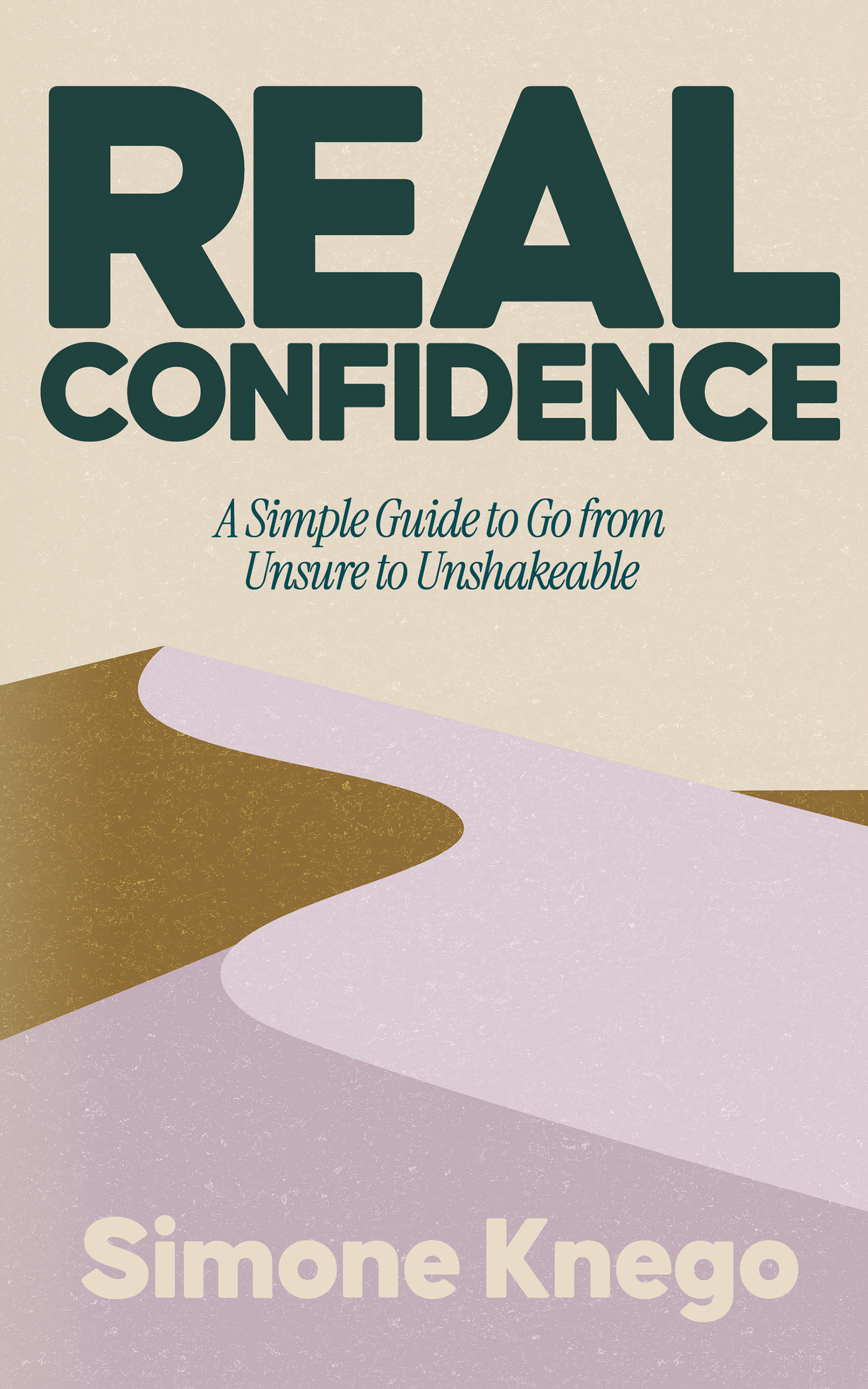
Simone Knego is a USA Today bestselling author, confidence coach, and international keynote speaker. Her book REAL Confidence is available at realconfidencebook.com. To book Simone for your next event, visit simoneknego.com.